

Firecrackers and Bombs: How Might Small Relational Hurts Become Big Family Conflicts?
Every family experiences moments when somebody feels disappointed, misunderstood, criticised or let down – these are all part of the orchestra of family life. For
Every family experiences moments when somebody feels disappointed, misunderstood, criticised or let down – these are all part of the orchestra of family life. For

Adolescence is a time of change. Some of these changes are outside a young person’s control, but others require making decisions. That might be what to do after leaving secondary school, which subjects to study, or decisions about relationships with others.

Chronic pain is common in young people. Between 11% and 38% of children and adolescents may cope with chronic pain as part of their everyday lives. Chronic pain is often invisible and unseen by others, an unrecognised challenge that affects a young person’s emotional, physical, and social well-being.

Eating disorders often control a young person’s life. They can dictate their decisions and choices, overpowering other goals, dreams, and values. At the same time, starvation affects the brain’s ability to think clearly, make reasoned decisions, and be resilient to external and internal challenges.

People often talk about depersonalisation and derealisation together, but they actually refer to different things. Depersonalisation is when someone feels detached from or outside of their body or mind. In periods of derealisation, a person feels like their inner world, body, or surroundings are unreal, dream-like, or altered in some way.
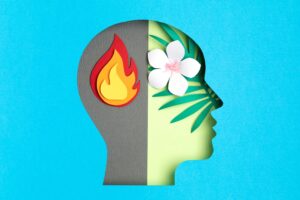
Borderline personality disorder (BPD) is a serious mental health condition that usually develops during late adolescence. BPD affects the way that young people see themselves and relate to others around them.

Eating disorders are serious mental health conditions that are common among young people. The good news is that, with professional support, most young people can make a full recovery, reclaiming their physical and mental well-being.

Family-based therapy (FBT) is the most established treatment for anorexia nervosa among children and adolescents. FBT empowers family members to engage in the treatment process and focuses on restoring the physical health of a young person.

Parenting – and parents’ own relationships with food and their bodies – can have a big impact on how young people feel about themselves and their bodies. Some parental behaviours can encourage body positivity and positive relationships with food, while others may make the development of disordered eating behaviours more likely.

When you greet a friend, family member, or even a stranger, it might feel normal to compliment their appearance. Compliments are usually well-intended: we want the other person to feel good about themselves.
Every family experiences moments when somebody feels disappointed, misunderstood, criticised or let down – these are all part of the orchestra of family life. For

Every family has its own dynamics, its own patterns and, at times, its own moments of feeling stuck. While the details may differ, one experience

In June, the UK government announced plans to ban social media use for under-16s. This decision followed a consultation process with parents, children and experts


